Blog

SMU Cox School of Business Essay Tips and Examples

How to Get into Cox School of Business: SMU Cox Essay Tips and ExamplesApplicants to the Cox School of Business at Southern Methodist University in Dallas, Texas (SMU Cox), must submit two required essays, with one being largely a traditional personal statement and the other asking candidates to share five things about themselves that they would like their future classmates to know. Applicants who feel they need a little more space to convey some key or clarifying information can take advantage of the school’s optional essay, though at just 250 words, they will need to be succinct in doing so. Read on for our full analysis of SMU Cox’s 2023–2024 application essay prompts.

SMU Cox 2023–2024 Essay Tips

Essay 1: SMU Cox is a close-knit community that values teamwork. Our students are put in study groups within their cohort to build leadership and collaboration skills. What are five things you would like your study group to know about you? (500 words or less)

Whether this question is meant to be specifically about leadership and teamwork or strictly about the qualities and experiences that make you unique is not immediately clear. To bridge this (potential) gap, at least some of the aspects of yourself that you outline in this essay should reveal or imply that you are a good team player and work well with others.

Before you start writing, do some foundational research into how study groups work at SMU Cox. The prompt notes that at least one purpose of the school’s study groups is to help students “build leadership and collaboration skills,” so if you feel that an aspect of your personality or a certain skill you possess would support this goal, be sure to include it in your essay.

Although the prompt’s implication is that you will be communicating with your future classmates, the truth is, of course, that you are speaking to the admissions committee (and maybe even to whoever will ultimately be assembling the school’s study groups). For your essay to be most successful and compelling, you must demonstrate that you are interesting, additive, and unique—and that you have something valuable to offer your future teammates. 

Essay 2: What are your short-term post-MBA career goals (including the target industry, sector, and/or organization) and your long-term ambitions? (100 words or less)

With this straightforward query about your motivation to earn an MBA and expectations as to where you will go with it after graduation, Cox simply wants you to spell out what you have in mind as you approach this next phase of your life and career. The school does not ask about your past professional experiences, but briefly providing some context for your goals could be good, especially if doing so strengthens or supports your stated aspirations in a clear way and helps the admissions committee better understand your trajectory and potential.

Cox wants to know that you have given this aspect of your MBA experience serious thought, have researched your options, and are approaching business school with a strong sense of purpose—that you have a fitting and attainable goals in mind and can articulate them clearly and thoroughly. By providing the level of detail the essay question demands (“industry, sector, and/or organization”), you will be able to convince the school that you have done the necessary background work and are fully cognizant of where you want to go after graduating. 

Think about what you truly want to do with your career and lay out your aspirations clearly. Keep in mind that the rest of your application needs to provide evidence that your stated goal aligns with your existing skills and profound interests, especially once they have been augmented by an MBA education. This will show that your professed goals are achievable and lend credibility to your claims. Similarly, you want to be sure that the connection between your short-term objective and your long-term vision is clear, credible, and possible.  

One’s short-term and long-term goals are part of a traditional personal statement, so we encourage you to download your free copy of the mbaMission Personal Statement Guide, which helps applicants write this style of essay for any school. This complimentary guide offers detailed advice on approaching and framing these topics, along with multiple illustrative examples.

2023–2024 MBA Insider’s Guides are Available to Download for Free!

Wharton Kellogg Harvard Insider Guides

We at mbaMission are proud to announce the release of the latest edition of our MBA Insider’s Guides! Since we first launched these extensive guides in 2008, we have fine-tuned them each year to provide our readers with the most detailed and recent information on each school as possible. We revamped the structure of the books last year, which ensures that our 2023–2024 edition makes getting to know the schools easier than ever.

Informed by firsthand insight from students, alumni, program representatives, and admissions officers, each guide offers detailed descriptions of the following:

Booth Columbia Stanford Insider Guides

  • Defining characteristics of the school’s location, class size, curriculum, teaching methods, facilities, alumni base/involvement, and rankings
  • Courses, experiential opportunities, faculty, and clubs related to MBAs’ most common career areas, including consulting, finance, and entrepreneurship
  • Each admissions committee’s stance on GMAT/GRE/TOEFL scores, recommendations, the waitlist, layoffs/unemployment, and other application elements
  • Notable professors and social/community events
  • MBA rankings along with class profile statistics and top industries for each program to better illuminate certain trends and characteristics

We encourage you to download your free copy of our comprehensive guides for every school to which you plan to apply. And to obtain further advice on applying to business school, please contact us for a free 30-minute consultation.

MBA Admissions Myths Destroyed: The Admissions Committee Will Not Notice My Weakness(es)

Our clients frequently ask, “If I write the optional essay about my [low GMAT score, low GPA, bad semester in college, long stretch of unemployment, etc.], will it call attention to that weakness and overemphasize it?” In short, no. Writing the optional essay about a weakness will instead allow you to control the narrative about that issue and thereby better mitigate any negative effects it might have.

The admissions committee very likely will take note of a low GMAT score or a low GPA and will be left with unanswered questions about that weakness if you do not use the optional essay to address it. Rather than putting the committee in the position of having to guess at an explanation, take control of the situation and grab the opportunity to explain the details behind the weakness.

For example, let us say you have a weak GPA overall because you worked full time in your first two years of college, but your GPA from your last two years is much stronger. Not writing the optional essay means that you are hoping the admissions committee will take the time to search through your transcript, note the change in the GPA, and examine your job history—and then make the connection between your two years of full-time work and your subsequently lower grades during those years. On the other hand, if you use the optional essay to explain exactly what happened, you no longer have to simply hope that they will put in that extra effort and can instead be confident that they are evaluating you using complete information. Likewise, they will not have to guess at the reason behind your low GPA, because you will have proactively filled in the story.

The bottom line is that the admissions committee is made up of professionals whose obligation is to examine all aspects of your profile. They are not punitive, but they are also not careless and will certainly note any weaknesses like those mentioned here. Keep in mind that these individuals are only human and are dealing with thousands of applications. Any way that you can save them time and effort by guiding them through the story of your application can only work to your advantage.

ChatGPT Just Does Not Know You (or MBA Admissions)

You might have watched our video “Should You Use ChatGPT for MBA Admissions Essays?” As you most likely know, ChatGPT is a powerful natural language processing model that can generate realistic and engaging conversations based on your input. We will admit that it is really cool technology, and we have had fun trying out different MBA admissions essay prompts with it. But overall, the responses it generates—at least for now—are too generic to use in an MBA application.

The fundamental problem is that the AI knows absolutely nothing about you! So of course, it cannot generate an essay about what makes you you! It also knows nothing about the MBA admissions process or what admissions teams want in a candidate.   

We think offering some examples will help illustrate this more clearly. Let us start with this prompt: “In 25 words, what is something interesting about you that you would want your future classmates to know?” 

For each of the following responses, see if you can guess whether it was written by ChatGPT or an actual applicant:  

  • I can speak and understand over 100 human languages!
  • My band, Hammond Eggplant, once opened for a band that opened for a band that opened for Bon Jovi in 1983. I am the drummer.
  • I can generate creative writing, answer questions, and help with tasks.

Okay, so that might have been too obvious. (The one written by an actual applicant was the second one, about the drummer.) But ChatGPT itself understands why its responses are so obviously not personal. When we typed in “What is something interesting about me that I would want my future classmates to know,” its response was, “As an AI language model, I don’t have information about your personal experiences or preferences.” Exactly! We could not have said it better. ChatGPT can write, but it cannot write about you.

Guess what? MBA programs want to know about you and what makes you a great applicant to their program. The admissions committees want to learn about what you have done professionally and in your community. They also want to hear about personal experiences that have shaped you into the person you are today. And they want concrete examples that demonstrate who you are, what you do (and have done), and the impact you have had. ChatGPT just does not have any of that information and therefore cannot write a compelling essay about you.

Let us try another example. This one is actually not as immediately obvious, but I will point out what is missing. This is the prompt: “Write an essay about overcoming a challenge.” And here is ChatGPT’s response:

One of the significant challenges that I faced in my life was the fear of public speaking. As a child, I would avoid any situation that required me to speak in front of a group of people. Even simple tasks such as giving a presentation in class or reading out loud in front of the class would fill me with anxiety and dread.

This fear of public speaking followed me into my adult life, and it started to hold me back from achieving my goals. I realized that I could no longer avoid speaking in public if I wanted to progress in my career and personal life.

I decided to take control of the situation and start working on overcoming my fear. I started by researching and reading books on public speaking, attending workshops, and seeking advice from experts in the field. I also joined a public speaking club where I could practice speaking in front of an audience in a supportive environment.

It was a slow and challenging journey, but with each small step, I began to feel more confident and comfortable speaking in public. I learned to control my nerves and focus on my message rather than my fears. I also developed techniques to help me prepare and deliver speeches effectively.

Eventually, I was able to overcome my fear of public speaking, and it opened up new opportunities for me. I was able to take on more leadership roles in my work and community and communicate more effectively with others. It also gave me a sense of pride and accomplishment, knowing that I had faced a significant challenge and overcome it.

Okay, to be fair, the introduction is not so bad, but we would suggest starting off with a more engaging narrative that draws the reader in: “My voice began to crack. I lost my train of thought. Was I having an out-of-body experience? No, I was trying to speak before an audience of 20 colleagues on my area of expertise, and these were people who knew me! But I still couldn’t get the words out.”

Otherwise, though, that is a pretty impressive essay, considering it was spit out in a matter of seconds. But here is the issue—it could be anyone’s essay. Read it again, and you will see that that it includes literally no specifics. And even if you were to add specifics to make the essay more personal to you, the structure of the essay still leaves you with a narrative from childhood that is a little cliched. And this of course is not even the challenge you overcame. We could point out a litany of other problems as well, but what is most important is that the essay never discusses what you were able to do concretely and what you later accomplished after overcoming your challenge. What new opportunities did you seize at work and in your community? What did you do, and what was the positive impact of your effective speaking? These elements should be main points in this essay, but again, because ChatGPT does not know you, this ends up being a missed opportunity.  

We are interested to see how this technology evolves. If someday, ChatGPT is able to learn about your professional accomplishments, community leadership, and personal experiences; determine which of those stories make you you; differentiate you from other applicants by offering specific personal examples; and show your fit with your target MBA programs, then we can talk (or chat). But for now, stick with your own creativity. 

If you would like to discuss your application essays and school selection in more detail with an expert MBA admissions consultant, sign up today for a free 30-minute consultation!

Ivey Business School Essay Tips and Examples

How to Get into Ivey Business School: Ivey Essay Tips and ExamplesIvey Business School does not demand too much from its candidates in the way of application essays, requiring just two submissions of 250 words each and a short video portion consisting of two one-minute recordings. For the first essay, candidates share their short-term professional plans and explain their interest in the Ivey program in particular. For the second, they must explore a challenge they have managed and present their takeaways from it. The videos should then round out these rather traditional essays by allowing applicants to share more of their personality with the admissions committee. For our full analysis of the school’s application essays for 2022–2023, read on.

Ivey Business School 2022–2023 Essay Tips

Question 1: Goals

What are your short-term career plans immediately post-MBA, and why is an Ivey MBA essential to those plans? (250 word limit)

With this straightforward query about your motivation to earn an MBA and expectations as to where you will go with it right after graduation, Ivey simply wants you to spell out what you have in mind as you approach this phase of your life and career. The school does not ask about your past professional experiences, but briefly providing some context for your goal could be good, especially if doing so strengthens or supports your stated aspirations in a clear way and helps the admissions committee better understand your trajectory and potential. 

To address the “why Ivey?” element of this prompt, you will need to discuss which of the school’s resources and/or what aspect(s) of its program as a whole will be most helpful to you in your pursuits, and this requires more than a pandering summarization or a stark list of offerings. This means you must move beyond the school’s website, viewbook, and related marketing materials and make direct contact with students, alumni, and other school representatives. If possible, attend an in-person admissions event or visit the campus to familiarize yourself with Ivey’s environment and resources, and if not, check out online events and options that might allow you to do so. 

Understanding what and who the school’s program truly entails, as well as how it works, is key in identifying and then articulating your need for an Ivey MBA in particular. By thoroughly doing your research on the school and drawing a clear picture for your admissions reader of how the particular offerings you have identified relate directly to your needs and how you intend to apply them, you increase your chances substantially of crafting a truly effective essay. 

The core components of this essay are elements of a traditional personal statement, so we encourage you to download your free copy of the mbaMission Personal Statement Guide, which explains ways of approaching these topics and offers several illustrative sample essays. And to learn more about Ivey’s academic program, unique resources, and other key features, download your free copy of the mbaMission Ivey Business School Program Guide as well.

Question 2: Decision 

Tell us about a challenge you have faced in your life, and what lessons you learned from it. (250 word limit)

A challenge or obstacle can be the catalyst for a powerful learning experience, whether you were able to completely overcome the impediment or not. So, for this essay, you can discuss a one-time occurrence or an ongoing issue that you deal with regularly. And because the school does not stipulate that the challenge you share be strictly professional or personal, you can (and should) consider every possible option you have from the various facets of your life—your workplace, academic background, family, personal life, community engagements, and so on. 

The one you ultimately choose should be the one that has made the most significant impact on how you view and/or operate in the world today. Ivey wants to understand how and what you learn from situations in which things do not go as planned. Your goal is to convey that you are not easily discouraged by setbacks but that you instead use them as learning tools or stepping-stones on your path forward.

Note that although the core essay prompt does not ask you directly about a decision you made in relation to this challenge, the “title” (for lack of a better word) of the essay question is “Decision.” We would therefore encourage you to select a story in which you had to make an important choice or call of some kind. If your best story for this essay does not center on a key decision, make sure to highlight other decisions you made in navigating the situation, to offer some insight into your thought processes when faced with alternatives and how you weigh options.

Consider using a narrative approach to tell your story, rather than simply stating the facts outright. Including vivid anecdotal details will help you most effectively convey the nature of your challenge. You want to ensure that the admissions reader fully grasps your struggle. Then, your explanation of what you have gleaned from the experience—and of the way in which you dealt (or are dealing) with the obstacle—will reveal your character. Avoid clichéd lessons, such as “resilience.” In what practical way have you been able to subsequently apply what you learned or expect to be able to do so in the future? Although the task might seem daunting at first, with a clearly presented narrative, you can indeed achieve all this in 250 words.

One important note: do not be afraid to reveal a weakness or error on your part. Although this is not a “failure” essay, if your actions helped create the obstacle or you failed to see the obstacle right before you (and should have), you should not shy away from an honest discussion of your responsibility. Such incidents are usually very effective learning opportunities and could therefore make for a compelling essay. The key is conveying what your takeaways are from the experience and explaining how it has influenced you and your life since.

Optional Essay Question 1: In your opinion, do your post-secondary grades accurately reflect your abilities? If no, please explain. (500 word limit)

Optional Essay Question 2: What, if anything, hasn’t this application given you the opportunity to say about yourself or circumstances you think would be important in the evaluation of your application? (500 word limit)

In general, we believe the optional essay is a good place for applicants to explain confusing or problematic issues in their candidacy, and one such issue that candidates often need to address is having a lower GPA than their target school’s average—or even just one that is lower than they feel they deserved. Ivey’s first optional prompt specifically invites such applicants to share the story behind their less-than-ideal academic background, which we assume is a welcome opportunity for some. So, if you need to, use this essay to address any questions the admissions committee might have about something in your transcript. Consider downloading our free mbaMission Optional Essays Guide, in which we offer detailed advice (and multiple annotated examples) on how best to approach the optional essay to mitigate problem areas in your application.

Although the second optional essay prompt here technically leaves the door open for you to share any other information about your candidacy that you feel might be pivotal or particularly compelling, be judicious in deciding whether the admissions committee truly needs any more input to be able to evaluate you fully and effectively. The Ivey application introduces these optional essay prompts by saying, “Please answer the questions below ONLY if they apply to your situation,” so do not feel that you absolutely must submit a response to either of them. The admissions committee pretty clearly does not want any additional input unless it is indeed warranted in some way. 

Do not fear that not submitting some kind of response to these prompts will somehow count against you (it will not). Because every additional essay demands that the admissions committee do extra work on your behalf, you must be absolutely sure that the added time will be worthwhile on their end. If you ultimately feel compelled to impart information that you believe would render your application incomplete if omitted, keep your statement(s) brief and on point.


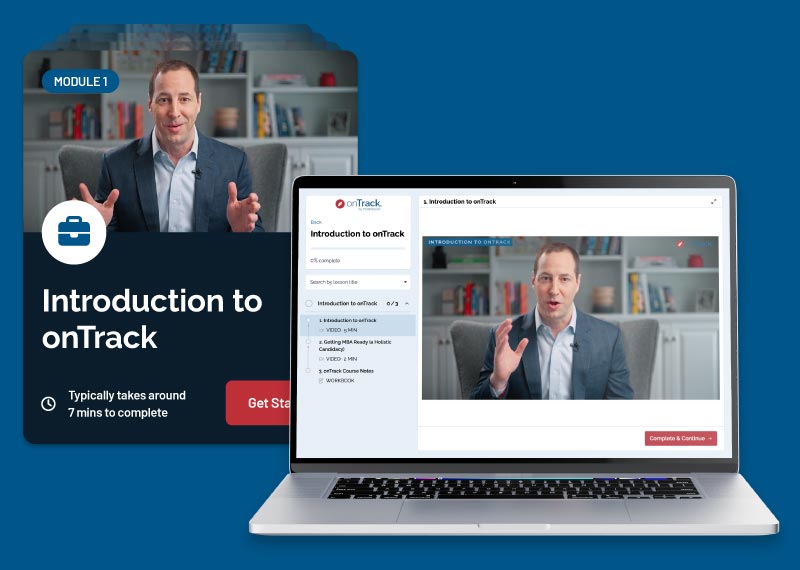
onTrack by mbaMission

A first-of-its-kind, on-demand MBA application experience that delivers a personalized curriculum for you and leverages interactive tools to guide you through the entire MBA application process.

Get Started!

2026–2027 MBA Essay Tips

Click here for the 2025–2026 MBA Essay Tips


MBA Program Updates

Explore onTrack — mbaMission’s newest offering allowing you to learn at your own pace through video. Learn more