Many business schools use their essay questions as an opportunity to ask about the unique contributions you will make to their particular program. Unfortunately, candidates often make the mistake of thinking that a bland summary statement like “I will bring my leadership skills to XYZ School” will sufficiently express their intended contribution. One reason we prefer to work with business school candidates “from start to finish” is so we can prevent such problems. Simply relating a story about a past experience and then repeating the main point does not demonstrate that you can or will make a meaningful contribution to the school. Ideally, you want to go further, explaining how you would apply and use your experience and skills while at the school in a way that would offer some benefit to others, thereby demonstrating a true understanding of your fit with that particular program.
Many MBA applicants assume that being rejected from a top business school means the end of their MBA dreams. In reality, however, some of the most successful MBA students—and later, business leaders—applied multiple times before earning admission.
A strong GMAT score can improve your chances of being admitted to top MBA programs around the world, and it can even increase your odds of receiving scholarships at many universities.
In this post, we provide a thorough overview of the GMAT exam, including its structure, question types, scoring process, and percentiles. We will also discuss what qualifies as a “good” score and even touch on some alternatives to taking the GMAT.
MBA admissions committees often say they understand if an applicant does not have a recommendation from a supervisor, but do they really mean it? Even if they insist this is true, if every other applicant has a recommendation from a supervisor, not having one would put you at a disadvantage, right? Not necessarily!
Whether you love social media or hate it, you cannot afford to ignore it when you are applying to business school!You should assume that admissions committees will assess how your character and interests are reflected in your social media and general online presence—just as firms do during the recruiting process.
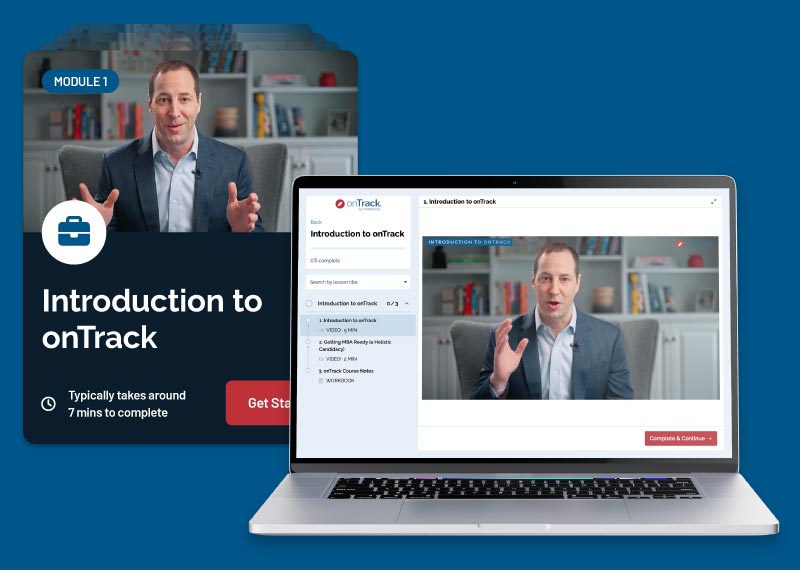
A first-of-its-kind, on-demand MBA application experience that delivers a personalized curriculum for you and leverages interactive tools to guide you through the entire MBA application process.