In this episode of The mbaMission Podcast, mbaMission Senior Consultant Harold Simansky and Founder Jeremy Shinewald continue their conversation with Shari Hubert, associate dean of admissions at Duke University’s Fuqua School of Business. The discussion moves beyond essays and interviews to explore the program’s paired principles, leadership model, alumni culture, Durham setting, and broader Duke University connections.
A bucolic college town, a smaller MBA program, a tightly knit community, an alumni network known for really taking care of its own, access to countless outdoor adventures in the surrounding areas (not to mention picturesque views), and a curriculum with a mandatory international component. Are we describing the Darden School at the University of Virginia (UVA)? Or maybe Dartmouth College’s Tuck School of Business? In fact, all these descriptors apply to both of these renowned MBA programs, which consistently find themselves among the top ten in various business school rankings and often battle for the same students.
If you are considering attending business school to help facilitate a significant career switch, you are not alone! Many MBA students earn their degree to enable some sort of professional change, whether it is related to industry, functional role, or even geography. And essentially everyone who earns their MBA pivots to some extent with their post-MBA job; the difference is just a matter of how big of a change is pursued.
While this desire is hardly unique and MBA admissions committees are very accustomed to career switchers, careful thought is needed before one acts to ensure that business school is indeed the right move and will lead to enhanced happiness and career fulfillment.
London Business School (LBS) has been posing the same core application essay question since 2015—one that largely constitutes a traditional personal statement—so the admissions committee must feel that the prompt elicits what it wants to know when evaluating candidates for the next class. More recently, the school added a second, albeit short, required essay, for which candidates are tasked with discussing their uniqueness. You might want to consider taking advantage of the optional essay as well if you feel that doing so will facilitate a more thorough evaluation of your candidacy. In our analysis, we offer our advice on crafting your approach, whether you ultimately decide to write two submissions for LBS or three.
The Saïd Business School at the University of Oxford takes a rather minimalist approach to application essays, asking its candidates to compose only one short, traditional written submission. The essay’s prompt gives applicants the leeway to share whatever additional information they believe the school needs to fully evaluate them, so they do not have to adhere to any particular topic. However, Oxford also requires applicants to complete an online assessment involving several competency-focused video questions. We imagine that many candidates would much prefer to write a second essay over contending with spontaneous queries on video, but applicants should embrace this opportunity to showcase themselves in a more dynamic way for the admissions committee. In our full analysis, we provide guidance on approaching Oxford Saïd’s single essay question and online assessment, as well as its separate prompts for 1+1 MBA candidates and reapplicants.
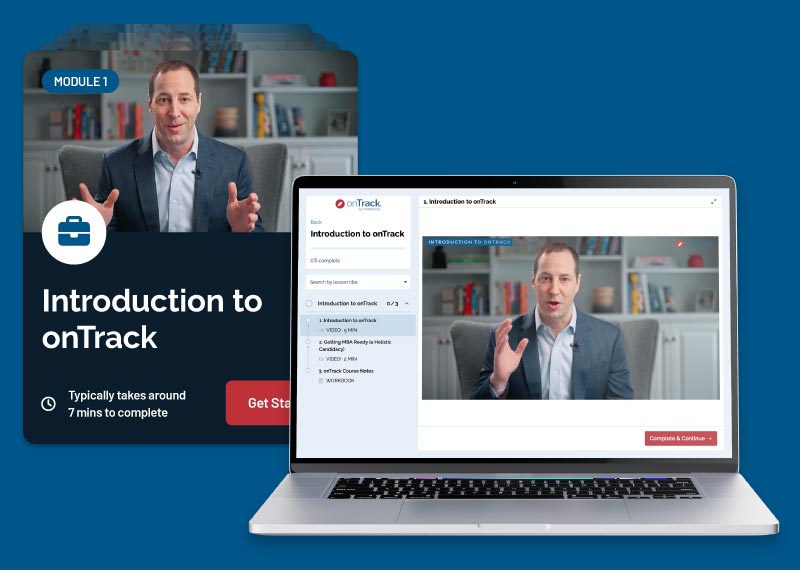
A first-of-its-kind, on-demand MBA application experience that delivers a personalized curriculum for you and leverages interactive tools to guide you through the entire MBA application process.