

Blog

Mission Admission: Resume Part III – Resume Space Savers

Mission Admission is a series of MBA admission tips; a new one is posted each Tuesday.

Ideally, your resume should be only one page long; admissions committees generally expect and appreciate the conciseness of this format. If you choose to submit a two-page resume or longer, your reader may have difficulty scanning it and identifying (and remembering) important facts. With these space constraints in mind, we offer two fairly straightforward “space saver” ideas:

1. Do not include a mission statement at the beginning of your resume. Your mission in this case is to get into the MBA program to which you are applying—and, of course, the admissions committee already knows this! A mission statement will take up precious space that can be used more effectively for other purposes.

2. Only your name should appear at the top of your resume. You do not need to include your address, email address, gender, marital status, etc., because these data will all be provided in your application form. As with a mission statement, adding this kind of information will take up precious space that can be used more effectively for other purposes.

Please, resist the urge to make your resume fit on one page by shrinking your font or margins. Your font should be no smaller than 10 pt type, and your margins should be no smaller than 1” on either side and 0.75” at the top and bottom. Rather than trying to fit too much information on the page, commit yourself instead to showcasing only your most important accomplishments that best tell your story.

Stanford University (Stanford Graduate School of Business) Essay Analysis, 2011–2012

Before we even begin our analysis of Stanford’s essay questions for this application season, we want to share a quote from Stanford Assistant Dean and Director of MBA Admissions Derrick Bolton that we feel bears repeating and is important to keep in mind with respect to your essays for Stanford or any other school: “Because we want to discover who you are, resist the urge to ‘package’ yourself in order to come across in a way you think Stanford wants. Such attempts simply blur our understanding of who you are and what you can accomplish. We want to hear your genuine voice throughout the essays that you write and this is the time to think carefully about your values, your passions, your hopes and dreams.”

At mbaMission, we constantly tell candidates to avoid attempting to portray themselves as something they are not—something they mistakenly believe the admissions committee wants them to be—in their essays. The schools want a class that is made up of diverse individuals, and by pandering to some perceived expectation, you are basically aspiring to create a generic application, rather than one that will separate you from the pack.

1. What matters most to you, and why?

Because of the very personal nature of this essay, you should thoroughly contemplate your response before you begin writing. You will need to truly brainstorm in depth and push yourself to explore the psychological and philosophical motivations behind your goals and achievements. We cannot emphasize this enough: do not make a snap decision about the content of this essay. Once you have identified what you believe is an appropriate theme for this essay, discuss your idea(s) with those with whom you are closest and whose input your respect. Doing so can help validate deeply personal and authentic themes, leading to an essay that truly stands out.

Once you have challenged yourself and identified your main themes, you should not simply provide a handful of anecdotes that support your idea—or worse, recycle the stories you used in a similar essay for another school. The best Stanford essays involve a true exploration of the concept or issue posed by the essay question and reveal a thorough analysis of decisions, motives and successes/failures. If you are merely telling stories and trying to tie in your preconceived conclusions, you are most likely not analyzing your experiences, but rather forcing a theme on the reader—and this will be transparent to an experienced admissions committee reader. In short, be sure to fully consider and develop your most sincere answers, outline your essays accordingly and then infuse your responses with your personality, thoughts and feelings. These are the first steps in crafting a compelling essay.

2. What do you want to do—REALLY—and why Stanford? You should address three distinct topics: your career aspirations, the role of an MBA education in achieving those aspirations, and your rationale for earning that MBA at Stanford, in particular.

Monday Morning Essay Tip: Do Not Neglect Your Personal Stories

Candidates often fixate on using their professional and community-based stories in their application essays. Many forget (or neglect) to even consider personal stories as possible differentiators. Because so many candidates have similarities in their professional experiences, personal dimensions should be highlighted where possible (considering that few examined lives can truly be said to be similar). Stories of commitment to oneself or others can have a strong emotional impact on the admissions committee and can help distinguish you from other applicants.

What types of experiences should you discuss? This question has no easy answer. For these stories to work, they need to be truly distinct. An example of a unique personal story might be that of an individual who helped his/her cousin, who was adopted at birth, relocate his/her birth mother; another might be one of an individual who took a six-month leave of absence to take his disabled grandmother on a tour of her home country. Clearly, not everyone has these exact experiences, but each of us has interesting anecdotes we can tell about ourselves. These are the kinds of stories that can be showcased in your essays with a little bit of thought and creativity.

UC-Berkeley Haas Essay Analysis, 2011–2012

UC-Berkeley’s Haas School of Business has streamlined their essays somewhat this year, finally removing a small piece that was arguably redundant, and that pertained to your research on the school (wasn’t that covered in the broader personal statement?). Haas still peppers you with a few quick hits of 250 words—five of them, in fact—that will require you to brainstorm at length to keep the reader learning. As you write these essays, you will be challenged to draw from various experiences to ensure that the reader is engaged, but you should not focus solely on discussing different experiences in each essay; you should focus on revealing different skills as well. Two stories about landing a new client are definitely redundant. Two stories that occur at the office, one about landing a new client and the other about being an effective mentor, serve to introduce new aspects of your experience. Still, if possible, you should offer a mix of professional, community and personal experiences in your essays to demonstrate that you have a strong internal motor and various arrows in your quiver.

1. What brings you the greatest joy? How does this make you distinctive? (250 word maximum)

This question will no doubt bewilder a lot of candidates: “What do they want to hear?” “What is a reasonable answer?” “How do I make myself distinct?” We suggest that you think about (surprise!) what truly brings you the most joy in your life and then focus pointedly on a single experience or a group of experiences within that area of interest. Perhaps you are happiest when you are indulging your imagination through art or pushing yourself physically in some kind of athletic activity. Although both of these options can be interesting, neither is necessarily “distinctive,” so you will need to determine—and then communicate—the way in which your particular passion for the activity in question is unique. This could entail how you engage in this interest or perhaps the circumstances in which you first developed an affinity for this aspect of your life—or another angle on the topic altogether. Obviously, conveying a sense of the joy you obtain from this thing or activity is important, but revealing how that joy is manifest in a way that is specific to you will mean the difference between a successful essay and one that is commonplace.

2. What is your most significant accomplishment? (250 word maximum)

Mission Admission: Resume Part II – What If My Results Are Not Quantifiable?

Mission Admission is a series of MBA admission tips; a new one is posted each Tuesday.

Presenting quantifiable results in your resume is preferred, because such results clearly convey your success in the actions you undertook. However, in some instances, you simply cannot quantify your success. In such cases, you can instead demonstrate nonquantifiable or even potential results. Consider the following examples:

  • Persuaded management to review existing operations; currently leading Manufacturing Review Committee, which will table its final report in June 2012.
  • Established divisional continuing education series, noted on review as “crucial” and “game changing.”
  • Initiated biweekly “Tuesday at Five” team social event, resulting in enhanced workplace morale.

In each of these samples, the results of the writer’s are not measurable, but they are nonetheless important. The accomplishments, while “soft,” are conveyed as clearly positive.


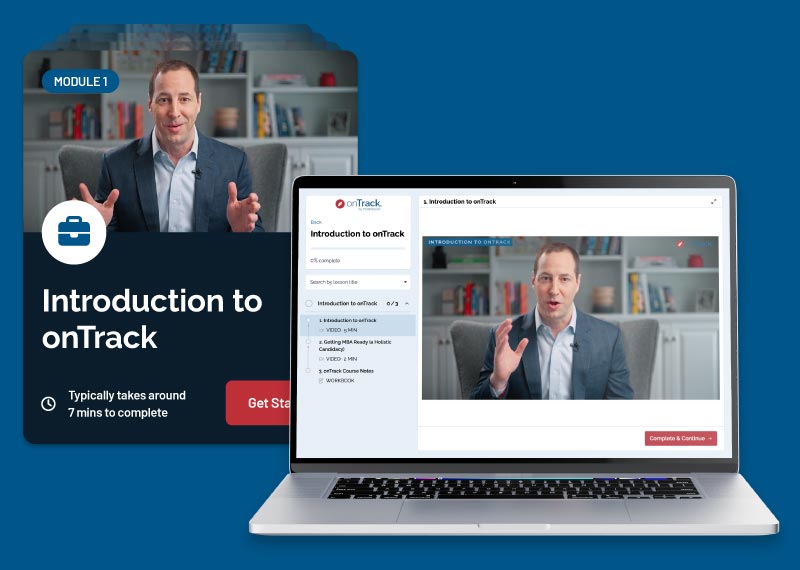
onTrack by mbaMission

A first-of-its-kind, on-demand MBA application experience that delivers a personalized curriculum for you and leverages interactive tools to guide you through the entire MBA application process.

Get Started!

2026–2027 MBA Essay Tips

Click here for the 2025–2026 MBA Essay Tips


MBA Program Updates

Explore onTrack — mbaMission’s newest offering allowing you to learn at your own pace through video. Learn more