As you get ready to tackle your business school applications, you might be wondering, What is the best way for me to research my target MBA programs? For schools that are in your city or within a relatively short distance, you should plan to attend in-person info sessions, class tours, and campus visits. Conducting this sort of research is essential to delivering a strong application. Just think about all those “Why our program?” essays. Perhaps even more importantly, visiting a school and seeing it firsthand can help you determine whether it is right for you.
Yale School of Management (SOM) is one of the few top MBA programs that give candidates just one required application essay with which to make an impression on the admissions committee. The school offers applicants a choice of three topics to, as the committee states, “ensure that you’re able to write about something important to you.” Applicants can expound on a meaningful commitment they have made and its underlying impetus and meaning, discuss a particularly significant community involvement, or describe a major challenge they have faced. The essay has a 500-word maximum, so you need to be clear, direct, and rather succinct in your response, without much preamble or extraneous text. If you feel your primary essay does not allow you to share an aspect of your profile that you believe is particularly important or compelling, or if you have an issue in your candidacy that would benefit from further explication, you can use the “optional information” space to fill in the blanks. Our full analysis of the school’s essay prompts for 2026–2027 follows.
The UCLA Anderson School of Management requires candidates to provide three “short essays.” The first is about the applicant’s goals and why Anderson is the best MBA program to help them achieve them, while the second prompt asks candidates how they anticipate adding value to the community. The third required essay tasks applicants with sharing what they would tell their classmates about themselves. Some candidates might be tempted to use the school’s optional essay to squeeze in more information about their candidacy, but anyone considering this option must be prudent about doing so, because Anderson very clearly states that the essay is specifically for “extenuating circumstances.” All together, these essays should enable you to share a good deal of information about your professional intentions, your personality, and your strengths. Our full analysis of all the school’s 2026–2027 prompts follows.
If you have ever wondered what MBA admissions consultants do for their clients—beyond editing their essays—this episode will illuminate a process that runs far deeper than you might expect.
In this episode of The mbaMission Podcast, Harold Simansky sits down with mbaMission Managing Director Rachel Beck and Gatehouse Admissions Founder Liza Weale for a candid conversation about the core responsibilities of admissions consultants. The discussion covers the full arc of the process, from brainstorming with clients and creating an experience inventory with them, through months of revisions and personal relationship building, to the final check before an application is submitted.
Product management is the general business practice within a company that supports and directs all the activities related to planning, developing, marketing, and launching a product. Product managers (PMs) own the product road map, working alongside stakeholders across an organization.
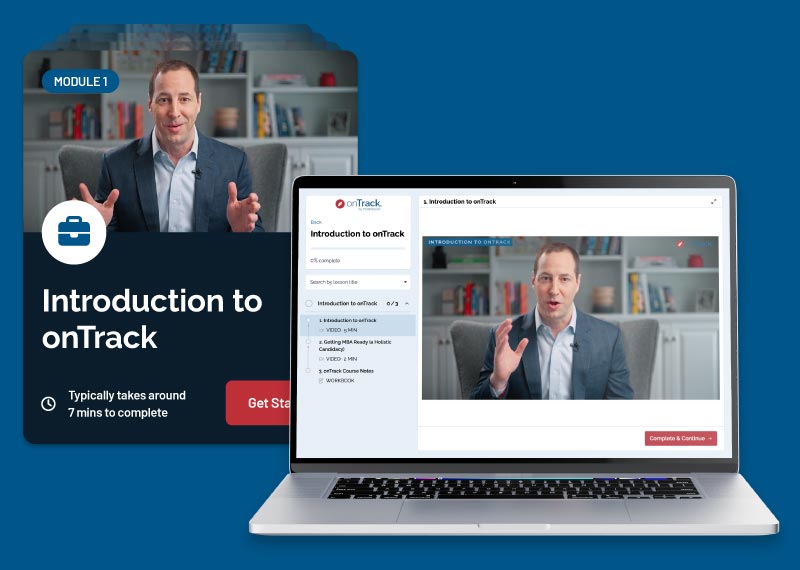
A first-of-its-kind, on-demand MBA application experience that delivers a personalized curriculum for you and leverages interactive tools to guide you through the entire MBA application process.