As interview invitations from business schools roll out, do your best to remain calm and let the admissions committees do their work. Although becoming a little apprehensive is natural if you have not yet received an invitation, you will certainly not increase your chances of receiving one by calling the Admissions Office and asking if the school does indeed have all your files or if an interview decision has been made. In fact, such calls can actually have a negative effect on your candidacy, inadvertently making you seem pushy or even belligerent.
We at mbaMission often receive questions about part-time MBA programs, so we thought we should offer a look at some of the pros and cons of this option.
As for the pros, the one that business school candidates cite most frequently is that the part-time MBA involves a limited opportunity cost. Unlike full-time MBA students, part-time ones do not miss out on two years of salary (and, in some cases, retirement savings) and can still earn raises and promotions while completing their studies. Furthermore, firm sponsorship seems to be more prevalent for part-time MBAs, so candidates who have this option can truly come out ahead, with a free education and continued earning throughout. Beyond the financial rationale, many part-time MBA students see an academic advantage; they can learn both in the classroom and at work and can then turn theory into practice (and vice versa) in real time, on an ongoing basis. Of course, a cynic might add that another pro is that part-time MBA programs are generally less selective. So, a candidate who may have had difficulty getting accepted to a traditional two-year program may have a better chance of gaining admission to a well-regarded school in its part-time program instead.
In Episode 125 of The mbaMission Podcast, mbaMission Senior Consultant Harold Simansky and Founder Jeremy Shinewald tackle the most frustrating outcome in MBA admissions: the waitlist. Unlike an acceptance or a rejection, the waitlist tells you nothing about where you stand and that ambiguity is exactly what makes it so hard to navigate.
The good news is that people do get in off the waitlist, and there are deliberate things you can do to improve your odds. Here is how Harold and Jeremy think about it.
The Wharton School at the University of Pennsylvania uses a very different interview format than most business schools do, opting for a virtual in place of a traditional admissions interview to evaluate its candidates.
In this post, we explain what you can expect in the Wharton TBD and how best to prepare for this one-of-a-kind interview.
When preparing personal statements that require significant information about career progress, many MBA applicants choose to discuss their accomplishments in chronological order. Although the simplicity of this approach makes it appealing, we encourage you to consider another way of showcasing your more recent and therefore potentially stronger accomplishments first. By taking this approach instead, you may capture your reader’s imagination more quickly and reduce the risk of being lost amid similar candidates.
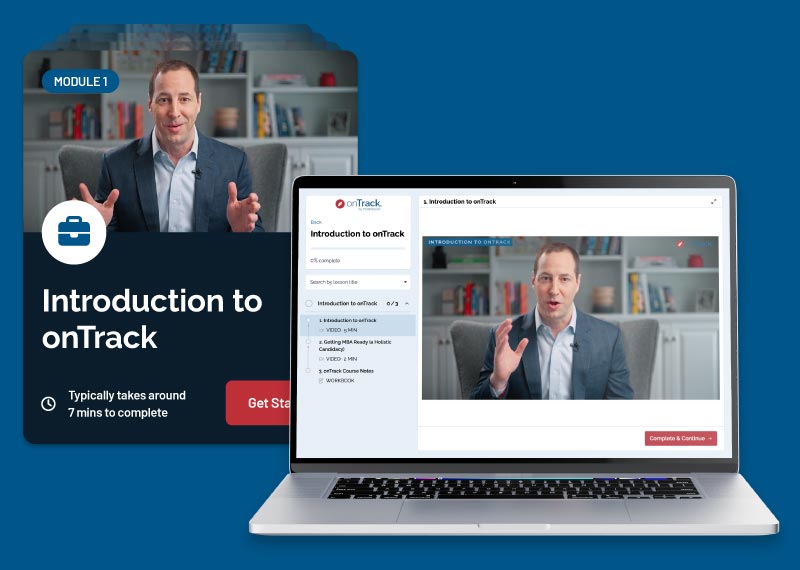
A first-of-its-kind, on-demand MBA application experience that delivers a personalized curriculum for you and leverages interactive tools to guide you through the entire MBA application process.