1. Commonplaceness; flatness; dullness
2. A trite or obvious remark, uttered as though it were fresh or original
Many candidates unwittingly start their essays with platitudes. For example, when responding to the HBS essay question “Tell us about a time when you made a difficult decision,” a candidate might mistakenly write the following:
“Managers constantly face difficult decisions. Still, everyone hates indecision.”
The writer doesn’t “own” this idea and cannot lay claim to this statement. A simple alternative would be to insert his or her experience and viewpoint into the sentence:
“Yet again, I was in the boardroom with Steve, anticipating that he would change his mind on the mbaMission file.”
By discussing your unique experiences, you take ownership of your story and engage the reader. Avoiding platitudes and generalities and ensuring that you are sharing your experience, rather than one that could belong to anyone else, is a simple but often overlooked step in creating a compelling message.
Mission Admission is a series of MBA admission tips; a new one is posted each Tuesday.
Around this time of year, we get many inquiries from MBA candidates who have just started the application process and are curious about whether or not they should visit their target programs. Is it worth the time? Will doing so impress the admissions committees? Of course, one thing to keep in mind is that a class visit has tremendous relevance beyond the formal admissions process—it is a chance for you to give the school a thorough “test drive.” You probably would not invest $30,000 in a car without driving it first, would you? So why would you commit to spending two years of your life, many years as an alumnus/alumna and hundreds of thousands of dollars in direct and opportunity costs without first knowing what you are getting?
We do not think that you need to visit at all costs, however. If you have limited funds or time, then you should not deplete your resources by visiting. There are many other ways to get to know your target schools without traveling to campus, such as Web sites, podcasts, conversations with alumni, outreach events, etc. However, if you do have the time and money, we strongly recommend that you visit your target schools and gain a priori experience—a brief trip could pay a lifetime of dividends.
When you select an MBA program, you are not just choosing your learning environment, but are also committing to becoming part of a community. Each Thursday, we offer a window into life “beyond the MBA classroom” at a top business school.
In the spring of the first year at Harvard Business School (HBS), student sections (each of which includes approximately 90 students of various ethnicities and nationalities and who have diverse professional backgrounds) compete against one another in the Section Olympics. This one-day event, which is not at all academic, includes activities such as Twinkie-eating contests, three-legged races, and dodge ball games. Prizes for the winners include bragging rights.
For in-depth descriptions of social and community activities at HBS and 14 other top MBA programs, check out the mbaMission Insider’s Guides.
Many MBA applicants feel that they are purchasing a brand when they select a program to attend, but the educational experience at business school is what is crucial to your future, and no one will affect your education more than your professors. Each Wednesday, we profile a standout professor as identified by students. Today, we focus on Campbell Harvey from Duke University’s Fuqua School of Business.
Multiple students interviewed by mbaMission described Campbell Harvey (“Global Asset Allocation” and “Emerging Markets Corporate Finance”), known as simply “Cam,” as an “amazing” professor, and one second-year remarked that “he alone should give Fuqua a place in the top ten as a go-to school for finance.” Harvey has published more than 100 scholarly articles, is editor of The Journal of Finance and serves on both the board of directors and the executive committee for the American Finance Association. His hypertextual finance glossary—which includes more than 8,000 entries and 18,000 hyperlinks—has been covered, linked to, and cited by the New York Times, Forbes, Bloomberg, the Washington Post, CNNMoney, and Yahoo. In addition, Harvey coauthored the book version of The New York Times Dictionary of Money and Investing: The Essential A-to-Z Guide to the Language of the New Market, published in 2002 (Times Books), with Pulitzer Prize–winner Gretchen Morgenson. An alumnus mbaMission interviewed said that Harvey was “one of the best professors I had,” adding that he is “very tough, very brilliant and very good at explaining things.”
For more information about Duke Fuqua and 14 other top-ranked business schools, check out the mbaMission Insider’s Guides.
Mission Admission is a series of MBA admission tips; a new one is posted each Tuesday.
If you are having trouble negotiating with your supervisor to ensure that he/she is putting the proper thought and effort into your application, you are not alone. Because of this asymmetry of power, a junior employee can only do so much to compel his/her supervisor to sit down and write thoughtfully. So, before you designate your supervisor as a recommender, you must first understand his/her level of commitment to helping you with your candidacy. In particular, your recommender needs to understand that he/she cannot create a single template and must personalize each letter and answer each MBA program’s questions using specific examples.
If your recommender intends to simply write a single letter and force it to “fit” the school’s questions, or if he/she plans to attach a standard letter to the end of the school’s recommendation form (for example, including it in the question “Is there anything else that you think the committee should know about the candidate?”), then your recommender is not actually helping you—in fact, he/she is hurting you! By neglecting to put the necessary time and effort into your recommendation, your recommender is sending a very clear message to the admissions committee: “I don’t really care about this candidate.”
If you cannot convince your recommender to write a personalized letter or to respond to your target school’s individual questions using specific examples, you will need to look elsewhere. A well-written personalized letter from an interested party is always far better than a poorly written letter from your supervisor.
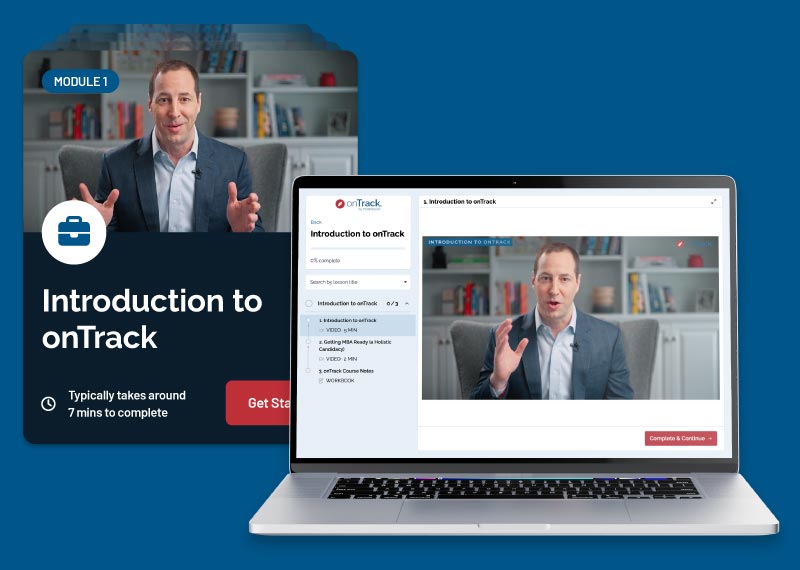
A first-of-its-kind, on-demand MBA application experience that delivers a personalized curriculum for you and leverages interactive tools to guide you through the entire MBA application process.


 Multiple students interviewed by mbaMission described Campbell Harvey (“Global Asset Allocation” and “Emerging Markets Corporate Finance”), known as simply “Cam,” as an “amazing” professor, and one second-year remarked that “he alone should give Fuqua a place in the top ten as a go-to school for finance.” Harvey has published more than 100 scholarly articles, is editor of The Journal of Finance and serves on both the board of directors and the executive committee for the American Finance Association. His hypertextual finance glossary—which includes more than 8,000 entries and 18,000 hyperlinks—has been covered, linked to, and cited by the New York Times, Forbes, Bloomberg, the Washington Post, CNNMoney, and Yahoo. In addition, Harvey coauthored the book version of The New York Times Dictionary of Money and Investing: The Essential A-to-Z Guide to the Language of the New Market, published in 2002 (Times Books), with Pulitzer Prize–winner Gretchen Morgenson. An alumnus mbaMission interviewed said that Harvey was “one of the best professors I had,” adding that he is “very tough, very brilliant and very good at explaining things.”