Former mbaMission Senior Consultant Mili Mittal has helped kickstart dozens of MBAs’ careers by assisting applicants with gaining admission to the top business school programs. Now, Mili’s entrepreneurial career is getting a big push forward. She recently launched a recipe recommendation site called mor.sl, which was profiled on industry mega-blog TechCrunch. Mili describes mor.sl as “Pandora + Amazon for cooking”—not bad company to keep! Mili’s site was born out of her desire to cook and eat healthier. Growing up spoiled by her mom’s homemade Indian meals, she found being an inspired chef harder and harder to do on her own. Mor.sl recommends recipes hand-picked for you based on your responses to a questionnaire and will inspire you to cook for yourself! Check it out—it works. Congratulations to Mili and mor.sl. We wish you much continued success!
Many MBA applicants feel that they are purchasing a brand when choosing a business school, but the educational experience is what is crucial to your future, and no one will affect your education more than your professors. Each Wednesday, we profile a standout professor as identified by students. Today, we focus on Edward Rogers from the Indian School of Business (ISB).
Edward Rogers teaches “Managing Complexity” in Term 7 at the ISB, and we suspect that he is likely an expert on the subject, given that he is the chief knowledge officer for NASA. His extensive publications on the subjects of organizational behavior and cooperation in high technology environments, in particular within the aerospace industry, and his considerable professional experience managing the same, make his class a popular choice among all students, regardless of their career goals. Based on the premise that managing complexity is often what separates the great from the truly exceptional leaders within organizations, the class aims to help students develop key communication and critical thinking skills to solve multidimensional problems within networked organizations. Advocating taking a systems approach to decision making as opposed to a purely “gut feel” instinct, the class also looks to impart ethical responsibility and a sense of interpersonal awareness and teamwork.
For more information about the ISB and 15 other top-ranked business schools, check out the mbaMission Insider’s Guides.
Mission Admission is a series of MBA admission tips; a new one is posted each Tuesday.
ROMA: Were you the guy who broke in?
GEORGE: …no.
ROMA: Then don’t sweat it, George, you know why?
GEORGE: No.
ROMA: You have nothing to hide.
GEORGE: When I talk to the police, I get nervous.
ROMA: Yeah. You know who doesn’t?
GEORGE: No, who?
ROMA: Thieves.
-David Mamet, Glengarry Glen Ross (Screenplay 1992)
For many applicants, the worst of the admissions process is over. But at this stage, a new anxiety looms: the background check. Should the majority of candidates be concerned about background checks? The simple answer is “No!” The admissions committees know that almost all candidates have represented themselves in an honest manner. Thus, background checks are not designed to bring accusations against the innocent, but are instead designed to catch those who have willfully deceived.
What does that mean, exactly? If you have indicated that you were at a job that never existed or have changed your title from Analyst to Vice President, you just might have a problem on your hands and a reason to sweat. If you accidentally noted that you left your job in January instead of February, no one is going to rescind your offer. You are certainly innocent until proven guilty, and the burden of guilt is not on the applicant who may have committed a minor error, but on the one who attempted to misrepresent or defraud.
Candidates often fret about striking the right balance between confidence and arrogance in their essays. For example, you might have difficulty choosing the better choice from between the following statements:
Example 1: “At the Stanford GSB, I will take advantage of the newly designed curriculum to…”
Example 2: “At the Stanford GSB, I would take advantage of the newly designed curriculum to…”
Or between these statements:
Example 1: “After completing my MBA at Harvard Business School, I will pursue a career in…”
Example 2: “After completing my MBA at Harvard Business School, I would aspire to a career in…”
In each set of examples, you are choosing between certainty (“I will”) and diplomacy (“I would”). Considering these options, you might ask yourself, “Is the first option too presumptuous?” or “Is the second option too weak?” The answer is that neither of these examples is “right”; each candidate needs to choose an approach that is consistent with his or her personality. However, the key is to maintain consistency—mixing the two styles is distracting to the reader and can seem sloppy.
Many MBA applicants feel that they are purchasing a brand when they choose a business school to attend, but the educational experience is what is crucial to your future, and no one will affect your education more than your professors. Each Wednesday, we profile a standout professor as identified by students. Today, we focus on Steven Rogers from the Kellogg School of Management at Northwestern University.
Students with whom mbaMission spoke were enthusiastic about Steven Rogers (“Entrepreneurial Finance”), who seems to embody a kind of split personality: although he is known for his easygoing style and wonderful sense of humor, he will also, we were told, “scare the crap out of you with a cold call.” Because Rogers is quite committed to cold-calling students (picking a student to pepper with questions to lead off a case discussion), students in his classes are always quite well prepared, because none of them wants to founder publically. Rogers is an experienced entrepreneur and thus brings both academic and practical perspectives to class. Lest any reader wonder why a professor who is known for scaring students deserves to be written about so favorably, we should note that Rogers has twice won the student-selected Lavengood Award for Outstanding Professor of the Year (1996, 2005). Moreover, in 2009, Ebony magazine named Rogers one of the top 150 influential people in America.
For more information about Kellogg and 15 other top-ranked business schools, check out the mbaMission Insider’s Guides.
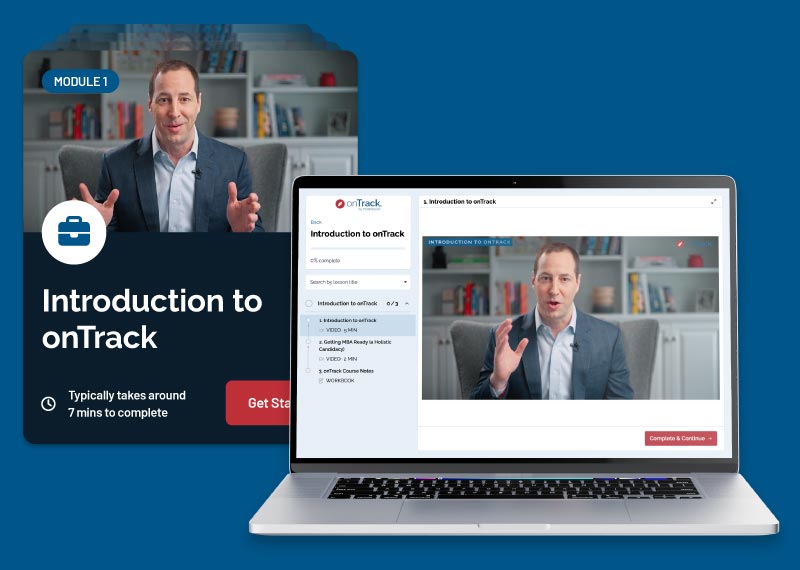
A first-of-its-kind, on-demand MBA application experience that delivers a personalized curriculum for you and leverages interactive tools to guide you through the entire MBA application process.


 Edward Rogers teaches “Managing Complexity” in Term 7 at the ISB, and we suspect that he is likely an expert on the subject, given that he is the chief knowledge officer for NASA. His extensive publications on the subjects of organizational behavior and cooperation in high technology environments, in particular within the aerospace industry, and his considerable professional experience managing the same, make his class a popular choice among all students, regardless of their career goals. Based on the premise that managing complexity is often what separates the great from the truly exceptional leaders within organizations, the class aims to help students develop key communication and critical thinking skills to solve multidimensional problems within networked organizations. Advocating taking a systems approach to decision making as opposed to a purely “gut feel” instinct, the class also looks to impart ethical responsibility and a sense of interpersonal awareness and teamwork.
 Students with whom mbaMission spoke were enthusiastic about Steven Rogers (“Entrepreneurial Finance”), who seems to embody a kind of split personality: although he is known for his easygoing style and wonderful sense of humor, he will also, we were told, “scare the crap out of you with a cold call.” Because Rogers is quite committed to cold-calling students (picking a student to pepper with questions to lead off a case discussion), students in his classes are always quite well prepared, because none of them wants to founder publically. Rogers is an experienced entrepreneur and thus brings both academic and practical perspectives to class. Lest any reader wonder why a professor who is known for scaring students deserves to be written about so favorably, we should note that Rogers has twice won the student-selected Lavengood Award for Outstanding Professor of the Year (1996, 2005). Moreover, in 2009, Ebony magazine named Rogers one of the top 150 influential people in America.