With MBA graduations right around the corner, many of you will be starting new jobs soon. Getting off on the right foot is critical for job satisfaction and long-term success within an organization (and beyond it). Whether your new employer offers substantial onboarding and training programs or whether you are expected to take the reins yourself as you forge ahead in your new role, these six tips can help set you up for success:
Many MBA applicants know they want to make a change professionally, but far fewer know how to clearly articulate what that change should look like. They might feel ready to take on more responsibility, pivot to a new industry, or enter a different function, but when asked to define their post-MBA goals, they draw a blank. Because career goals are such a central part of the MBA application, that uncertainty can quickly become a liability.
MBA students at the University of Virginia’s Darden School of Business are known to work quite hard amid the rigors of the case method. Each day, they are expected to read a business case and perform their own analysis of the situation presented. Then, they must compare and reason through their analysis with a small, diverse group of fellow students—their Learning Team. Students can often spend two to four hours prepping on their own and then two to three more with their teammates to arrive at ananswer (as opposed to theanswer). And what might be the reward for all this work? The student may be selected for a “cold call” to start off the class.
Columbia Business School (CBS) requires all its applicants to submit a short-answer goal statement of just 50 characters. In addition, January-entry applicants must respond to a second short-answer question about why they have selected the alternative program start date, while August-entry applicants are asked to describe their plans for the summer between the first and second year of the program. Both of these responses are limited to 50 characters, as well.
Many business schools use their essay questions as an opportunity to ask about the unique contributions you will make to their particular program. Unfortunately, candidates often make the mistake of thinking that a bland summary statement like “I will bring my leadership skills to XYZ School” will sufficiently express their intended contribution. One reason we prefer to work with business school candidates “from start to finish” is so we can prevent such problems. Simply relating a story about a past experience and then repeating the main point does not demonstrate that you can or will make a meaningful contribution to the school. Ideally, you want to go further, explaining how you would apply and use your experience and skills while at the school in a way that would offer some benefit to others, thereby demonstrating a true understanding of your fit with that particular program.
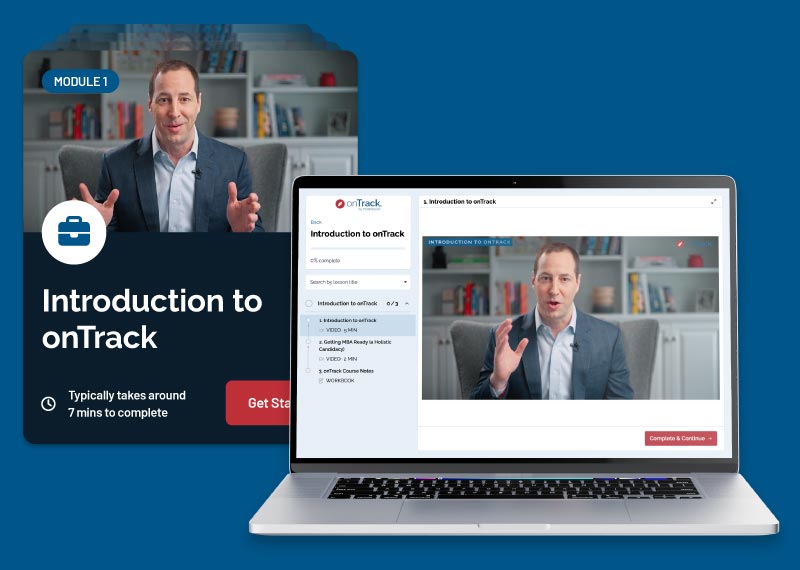
A first-of-its-kind, on-demand MBA application experience that delivers a personalized curriculum for you and leverages interactive tools to guide you through the entire MBA application process.